Contact us
  Partner Login
  Service Status
How to stop competing on price, start selling outcomes, and protect the margin that retail telcos are trying to take from you.

to protect your margin

to turning connectivity into a profit engine
Retail telcos going direct to your clients is not the real problem. The real problem is what happens after they land.
When a retail-supplied circuit develops a fault, who takes the call? You do. Who owns the escalation, manages the vendor relationship, handles the customer’s frustration? You do – without the margin to cover any of it. You are absorbing operational cost for a service you did not sell and cannot control.
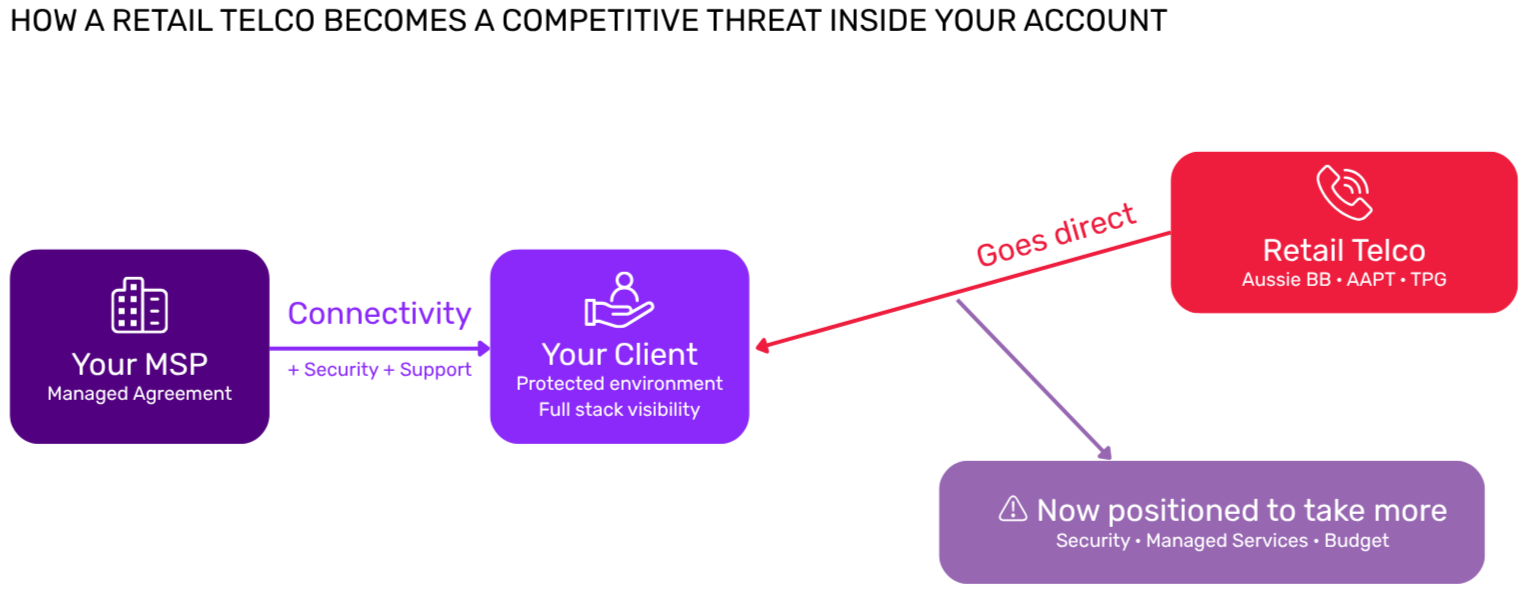
And it gets worse than a support headache. Larger telcos are not stopping at internet. They are moving into security services and managed offerings. A direct telco in your client’s environment is not just a billing inconvenience. It is a competitor with an active relationship with your customer – one that does not align to the technology roadmap you have built together, and one that is quietly positioned to take more.
nbn and TC4 pricing is publicly comparable. Customers will ask you to match it. If you do, you compress margin while keeping all the responsibility. If you don’t, you risk opening a conversation about the broader managed agreement.
If connectivity is commoditised, the answer is not to sell it harder. It is to change what you are actually selling.
Most business owners are not chasing speed for the sake of it. What they actually care about is whether their staff can stay productive, whether their systems stay responsive, and whether they can keep operating if something goes wrong. Speed is only relevant insofar as it supports those outcomes.
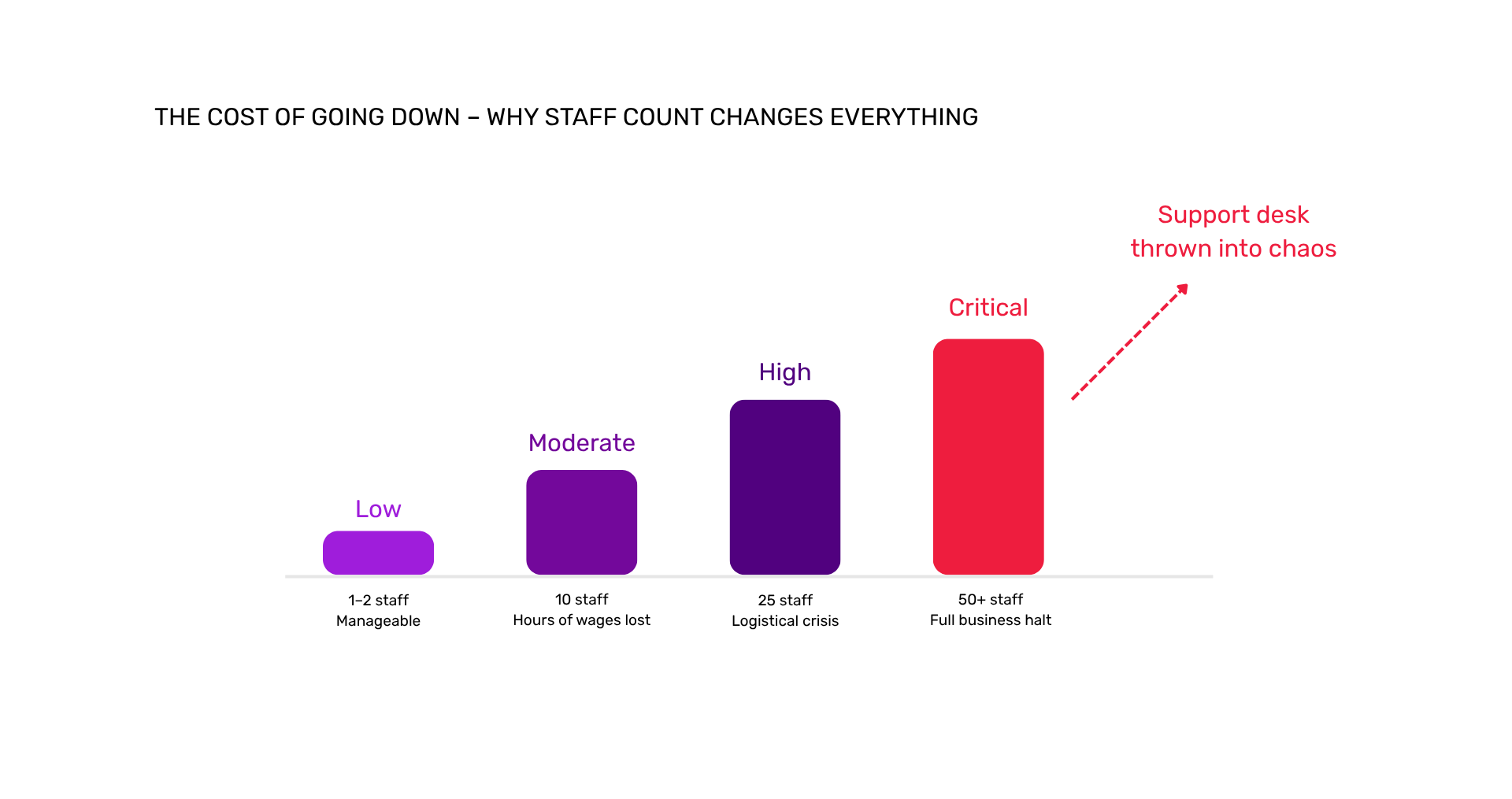
Here is a concrete way to think about it. A business with ten staff loses internet. They start tethering to mobile phones. That is ten people attempting workarounds, burning time, calling the helpdesk. Now picture that with 25 or 50 staff. It becomes a logistical crisis – getting that number of staff onto mobile workarounds is a nightmare in itself. Wages are being paid for people who cannot work. Your support desk is thrown into chaos. The client is panicking. That situation costs the customer real money and costs you real time, and it is entirely avoidable.
Internet now underpins Microsoft 365, VoIP, remote access, cloud applications, backup and security monitoring. When it drops, the business feels it immediately and completely. Treating it as a disposable utility undersells its impact and undermines your value as the MSP managing it.
They quote, they connect, they leave.
Price pressure is external. Margin control is internal. You cannot influence nbn wholesale pricing or what a retail telco puts on a promotional flyer. But you can control how connectivity is packaged, positioned, delivered and owned.
Standalone nbn is where margin goes to die.
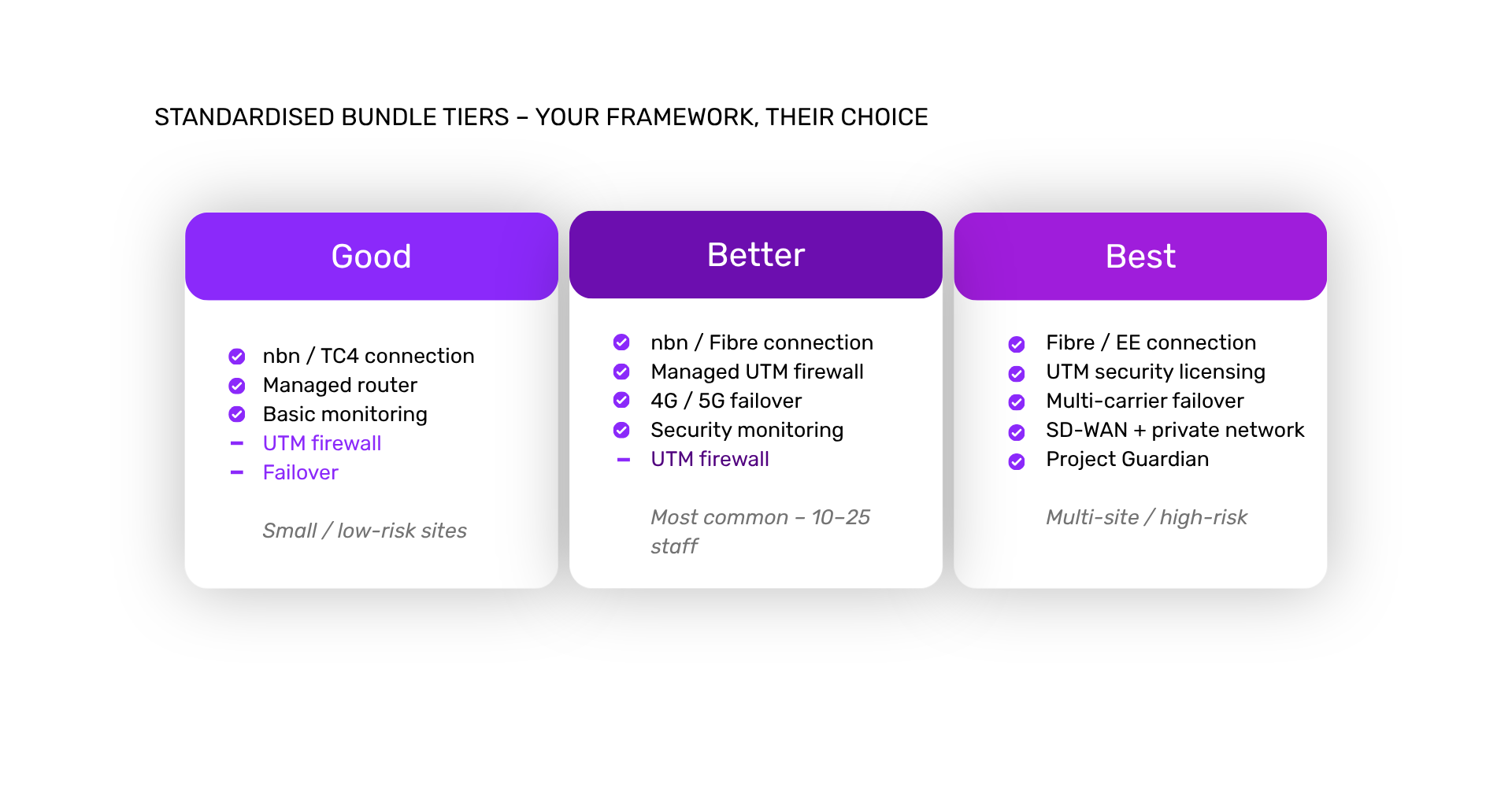
Standardise on a firewall vendor – Fortinet, Juniper, or similar – and apply the same good/better/best logic to device selection. A technician context-switching between five different device types on every support call bleeds time to resolution and burns margin on every interaction. Standardisation is an operational strategy, not just a sales one.
Many MSPs default to cheaper hardware because they are worried the customer will say no. This is the wrong instinct – for two reasons:
Document that you recommended the right solution. Let the customer say no. That is a very different position to never having raised it.
Hosted Network can supply routers as a rental option – no capital outlay, you apply margin directly.
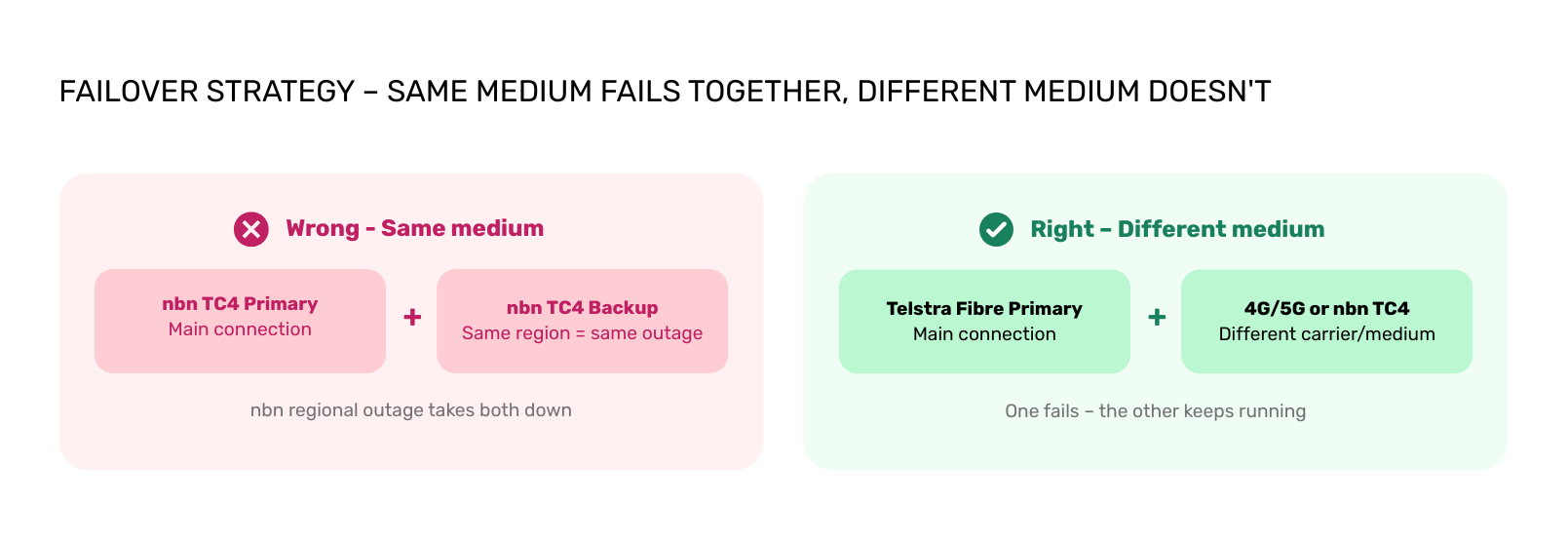
Your failover connection should always use a different technology medium to your primary. Doubling up on the same connection type offers no real protection — nbn outages are regional, meaning a second nbn TC4 service goes down for exactly the same reason as your primary.
Instead, mix mediums: pair a fibre primary with an nbn TC4 or 4G/5G secondary, or an nbn primary with a fibre or Starlink service. For smaller sites, 4G or 5G failover is usually sufficient.
For regional sites where fibre and mobile coverage is limited, Starlink is increasingly a viable option.
Speed invites comparison. Risk creates urgency.
Start every connectivity conversation with staff count:
Maybe a basic setup is acceptable.
From there, the security conversation is your most powerful differentiator – and the one a retail telco simply cannot have with your client.
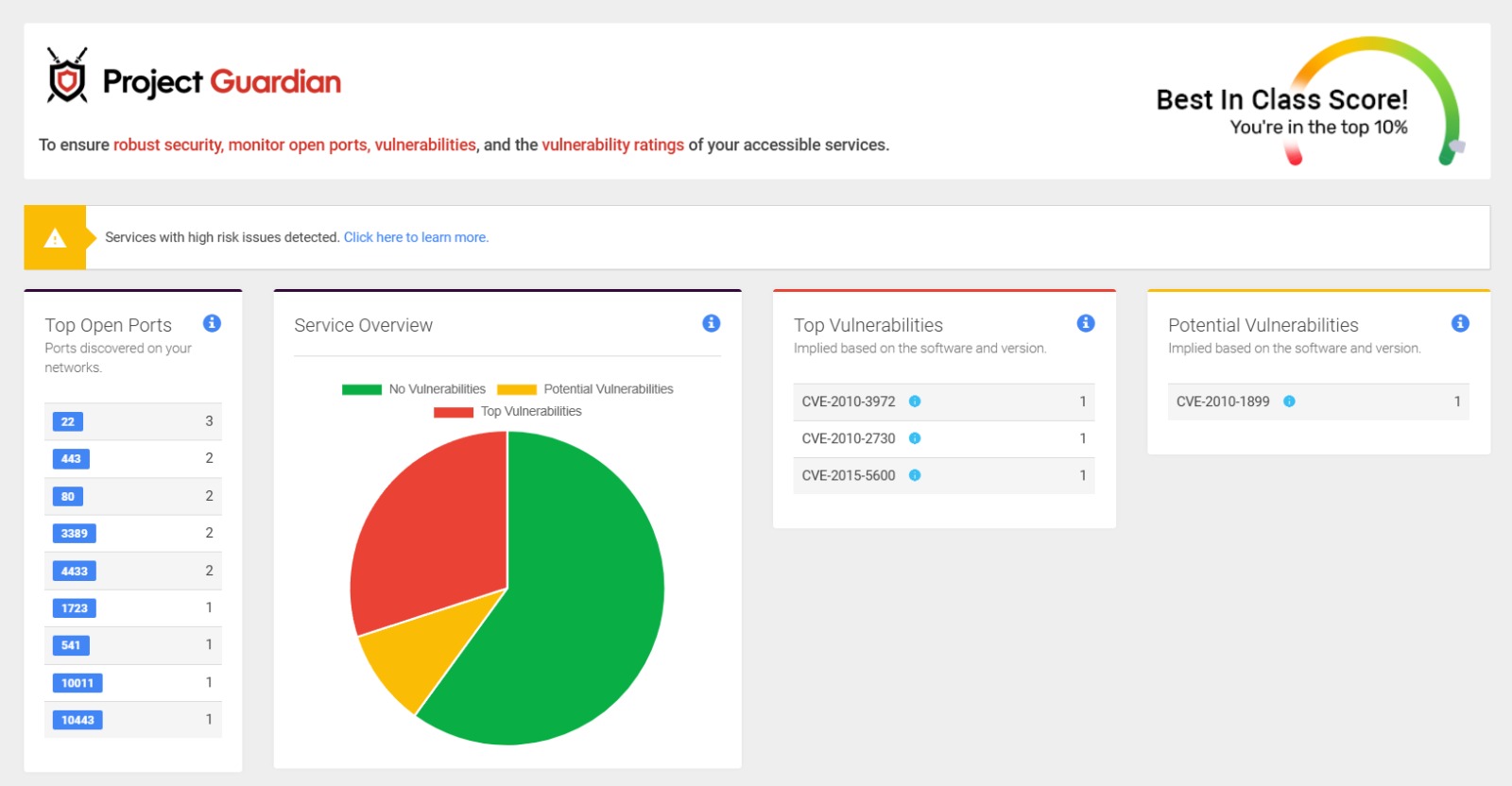
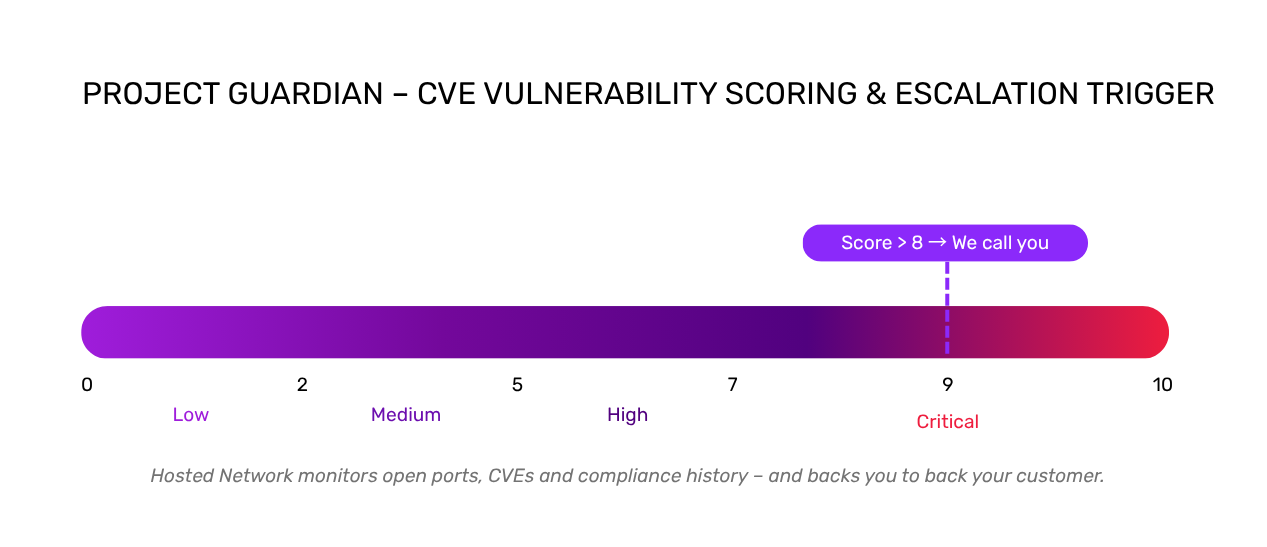
The security industry’s marketing has shifted heavily toward endpoint in recent years – and that shift has caused edge security to be underweighted in many client environments. The risk is specific: if a client’s edge security and endpoint security are not integrated, telemetry is fragmented across two systems. Threats may not be correctly identified because neither system has the full picture.
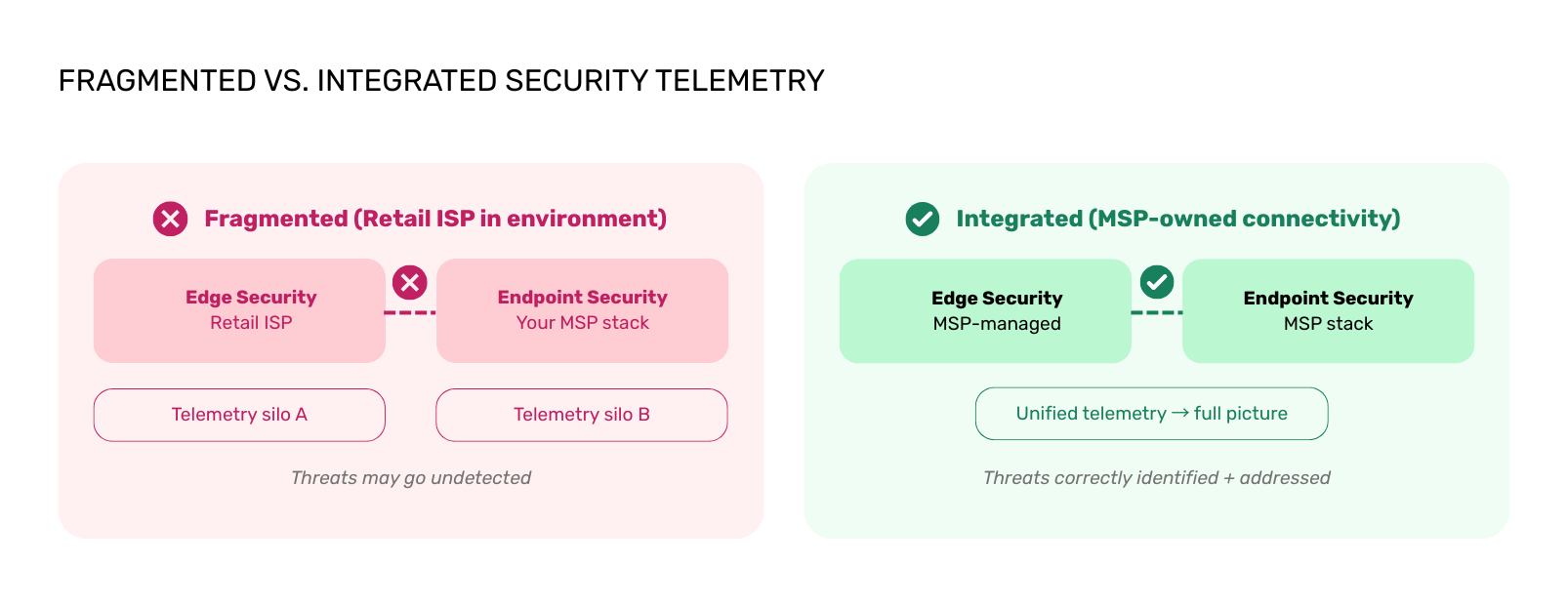
That is a conversation only you can have. A retail telco has no visibility into the endpoint environment you have built. They cannot connect those dots.
Margin is not just what you charge. It is what it costs you to deliver.
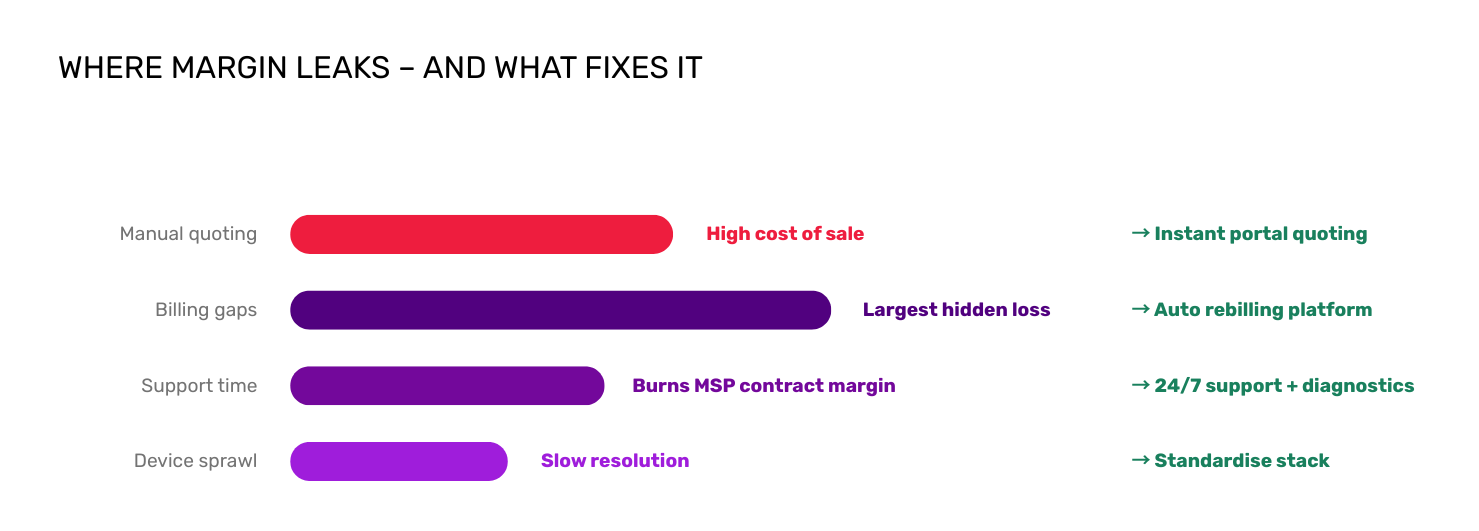
A service is provisioned, billing is not set up correctly, and two years later someone realises the client has never been charged. The client might accept a few months of back-billing – they will not accept two years. At worst, that conversation ends the relationship and puts the entire MSP contract at risk.
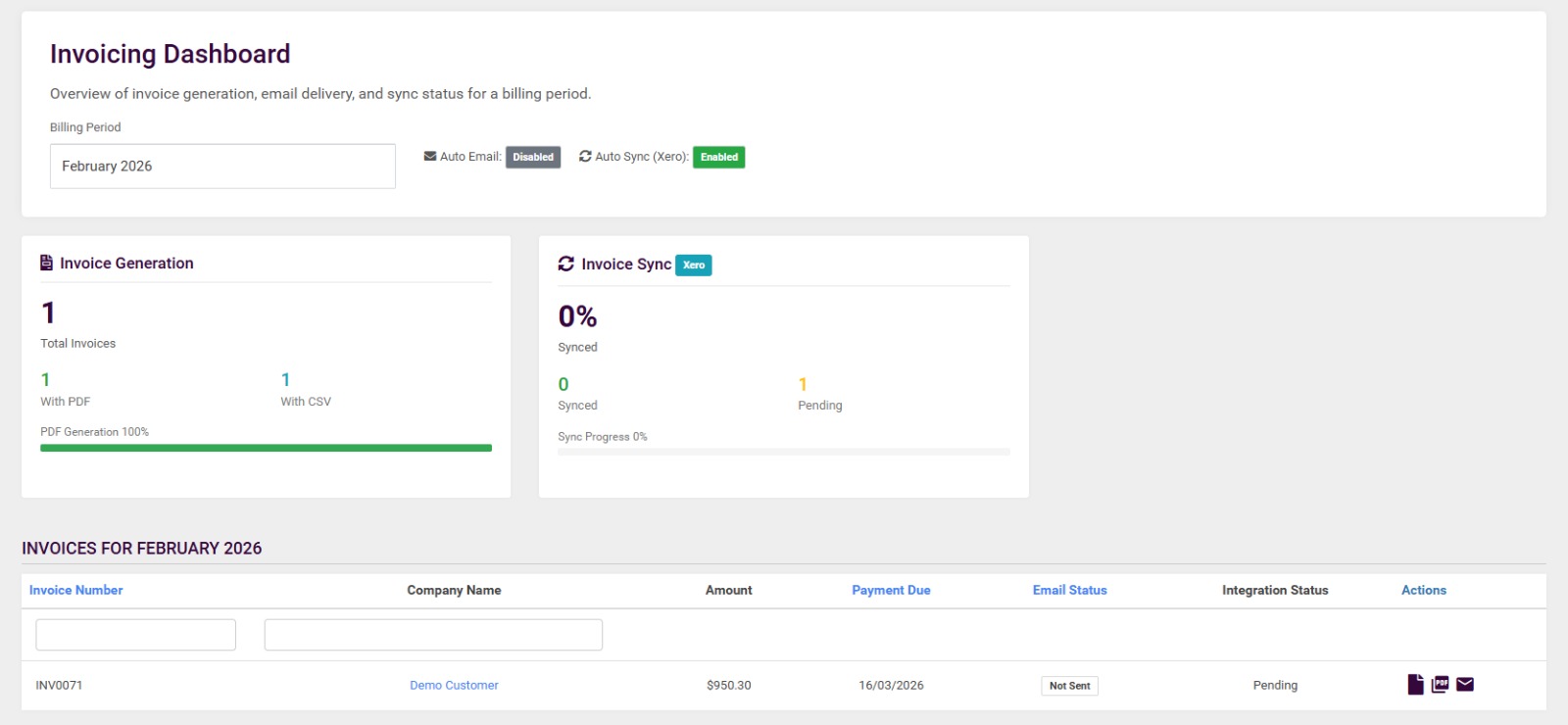

Hosted Network’s Rebilling platform syncs charges automatically – with your margin applied – into ConnectWise, Autotask, Halo PSA, or Xero. Charges do not fall through the cracks.
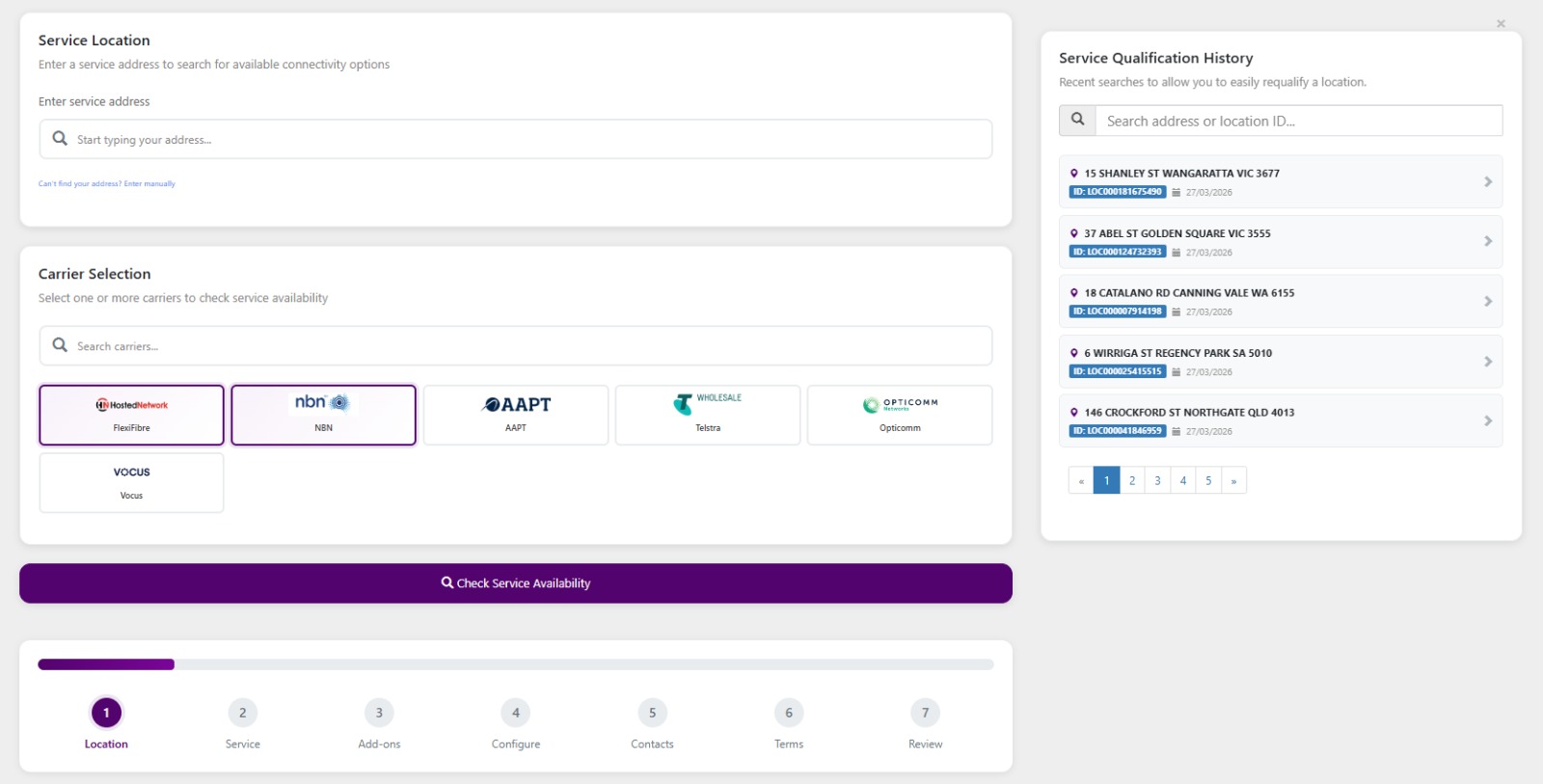
Every hour spent building a quote manually reduces the margin on the deal before it closes.
That is a conversation only you can have. A retail telco has no visibility into the endpoint environment you have built. They cannot connect those dots.
Connectivity is a strategic control point.
The MSP who owns connectivity – under their billing, their brand, their managed agreement – is in a fundamentally stronger position than the MSP working around a retail telco in their client’s environment.
When a competitor holds the connectivity contract, they have an active relationship with your client that you do not. They are having technology conversations. They are positioned for more.
Standardisation makes everything downstream faster: quoting, provisioning, support, billing. It also makes your sales team more confident, because they are not building bespoke solutions from scratch for every conversation.
Train your team to have the edge security conversation. If a client’s connectivity is not integrated with their endpoint environment, their telemetry is fragmented and their security posture has a gap. That is a business risk conversation, not a product pitch – and it is one only you can have. The conversation you start determines the objection you receive. Start with risk, and price becomes contextual rather than central.
For each of these clients, list unmanaged or externally-supplied connectivity as a risk item in your next QBR. Not as a sales pitch – as a genuine risk. Document that you have raised it. Leave it on the risk register until it is resolved. If the client acknowledges the risk and chooses not to act, that is their decision – but it stays documented and stays on the agenda at every subsequent review until something changes.
This approach does two things. It positions you as a trusted advisor who is looking out for their interests. And it creates a recurring, documented conversation that consistently results in the MSP picking up that connectivity service at the next renewal or review.
Make sure your team knows how to use the tooling available through the Hosted Network partner portal – these are not optional extras, they are the tools that protect margin in the back office and reduce your cost of sale, cost of support, and cost of billing across every engagement:
If you are not already, consider building the standardised solution stack into your managed services agreement as a requirement. The MSPs who do this consistently report fewer support issues, faster resolution times, and less commercial friction at renewal.
Connectivity commoditisation is not the problem. Unmanaged, unbundled, unowned connectivity is.
MSPs who reframe the conversation – from bandwidth to outcomes, from price to risk – are not competing with retail telcos. They are operating in a different market. The results follow:
That is the whole point of being in business.
Ready to build your managed connectivity offering? Reach out to the Hosted Network team. We can guide you through the right questions to ask, the right solutions to position, and the right way to have the conversation with your clients.